
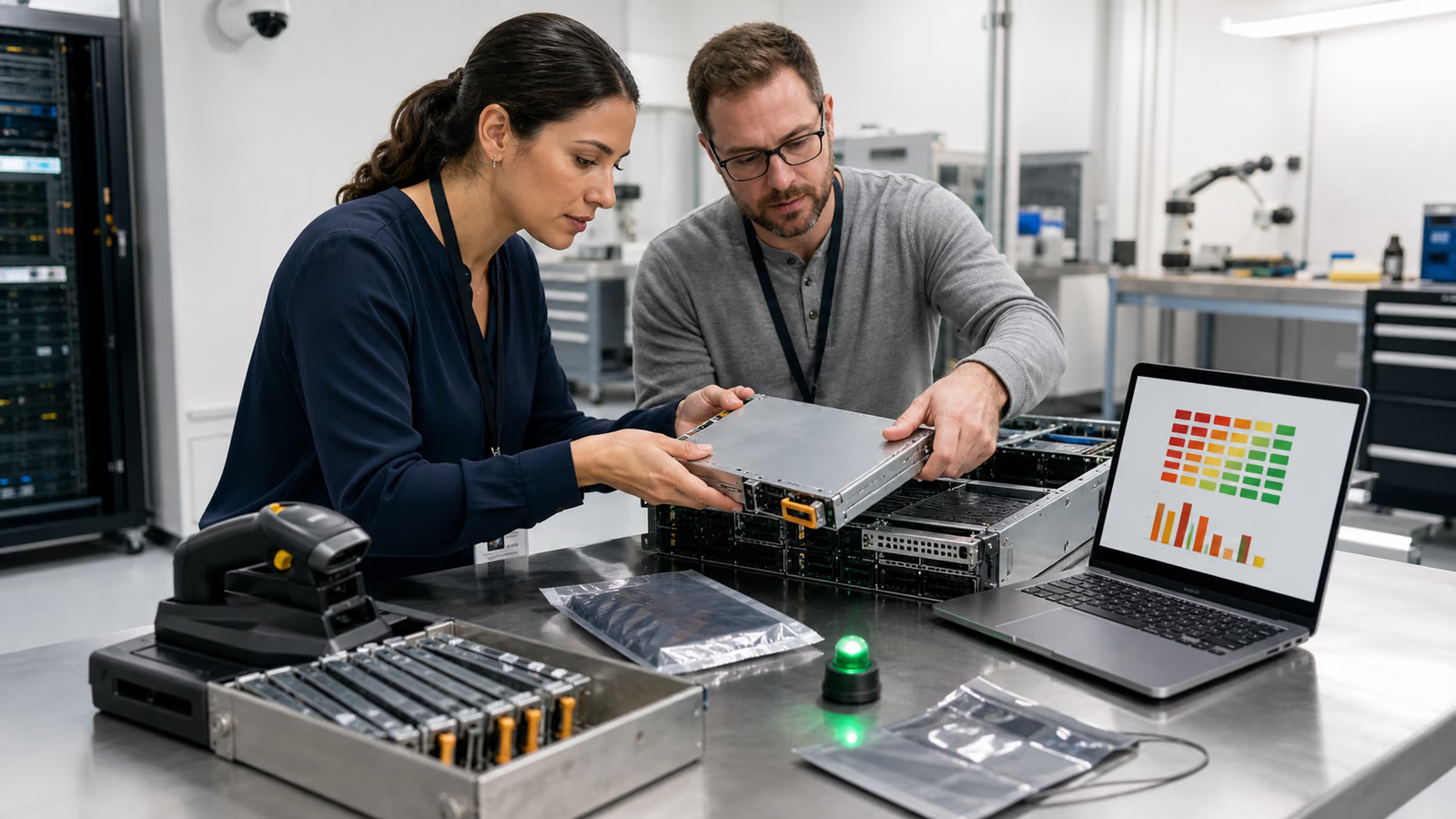








































A security operations team verifies CTEM vulnerability remediation and returns a server module to service after retesting.

IT security

Vulnerability management and CTEM

We help decide which weaknesses to address first, who owns the work and how to check the outcome. We combine scan findings with internet exposure, business impact and team capacity. Start with a review of key assets or ask us to operate a recurring programme.

Trusted by

Companies and institutions that need stable IT.

  • AdAc
  • Baseline
  • BTW
  • Charlie
  • Dako
  • EVO
  • FTH
  • IFJ
  • MAEM
  • Banki Spółdzielcze BPS
  • PJG
  • Spinel Trade
  • Suder
  • Ziko Apteka
  • Aforti
  • Base Finance
  • CADM
  • Consol
  • Deka Trans
  • Ferro
  • GATE
  • Igoria Trade
  • Magnet Audit
  • Novacura
  • Przetargi
  • Streamsoft
  • VUMO
  • Audytplus
  • BKB Kancelaria Prawna
  • CBT
  • Contimax
  • ERBET
  • FOMACH
  • Geotermia Podhalańska
  • LATIS
  • Metgal
  • PIBR
  • Spontex
  • Super Krak
  • Wolimex

From finding a weakness to checking the fix

A scan identifies known vulnerabilities and misconfigurations; it does not by itself prove an attack would succeed. CTEM (Continuous Threat Exposure Management) is a recurring cycle of scoping, finding exposures, prioritising, validating and organising remediation. Validation checks how controls perform in agreed scenarios. Remediation means applying a patch, changing configuration or reducing risk, and the outcome needs to be checked again. A report does not mean a weakness has been fixed, and business acceptance of risk is not a technical fix.

Discuss your vulnerability review

ISO 27001 · TÜV NORD Polska

TÜV NORD Polska has certified Virtline’s information security management system to PN-EN ISO/IEC 27001:2023-08. The published certificate states its scope and validity.

View Virtline’s certificate

Discuss your vulnerability review

Programme implementation process

Before work starts, we agree access, service impact and acceptance criteria. We do not assume every weakness can be fixed immediately.

01

Scope and conditions

We define servers, workstations, networks, web applications, containers, public services, cloud and industrial systems (OT/ICS). We review privileged and service accounts, remote access, administration interfaces, unsupported systems, dependencies and owners. Methods reflect asset sensitivity.

02

Initial scans

We configure the scanner, asset groups, credentials, policies, exclusions, schedule and result retention. Within the agreed scope, we run internal and external scans with or without credentials. We review pilot findings with administrators and application owners.

03

Priorities and integrations

We agree remediation order, deadlines and ticket workflows. We consider Splunk, Microsoft Sentinel, Energy LogServer or Wazuh for event analysis, and Jira, ServiceNow or GLPI for tasks. Connections, including patch management, depend on available versions, licences and interfaces.

04

Remediation and the next cycle

We assign tasks to owners and carry out agreed changes. We check the outcome with a scan or repeated validation. We agree reviews of open tasks, exceptions and recurring issues. A one-off assessment, tool deployment and ongoing operation by Virtline are separately agreed scopes.

Discuss your vulnerability review

Practical scope

What you receive

Results show findings alongside decisions, progress and limitations.

01 Asset and vulnerability register

Scope, scan dates, authentication method and exclusions; CVE, affected service and owner. We compare findings with CVE/NVD and vendor advisories, investigate false positives and group duplicates.

02 Remediation plan and ownership

Critical, high and medium priorities, agreed deadlines (SLAs) and tasks for administrators, application owners, suppliers and security staff. We record dependencies, downtime risks, change windows, rollback plans and escalation to business decision-makers.

03 Verification and exceptions

A re-scan or validation, patch versions, configurations and ticket approvals. We distinguish a fixed weakness, reduced risk and an open issue. Temporary risk acceptance has a business owner, rationale, compensating controls, expiry date, review date and conditions for ending the exception.

04 Reports for IT, management and auditors

Technical details, risk trends, overdue actions, recurring root causes, exposed systems and budget decisions. The material can support ISO 27001, NIS2, DORA and customer assessments; it does not confirm compliance.

Discuss your vulnerability review

CTEM platforms and validation

WithSecure Elements Exposure Management is an example of a platform combining device, identity, cloud, network and external attack-surface data to assess exposures and attack paths. Picus Security Validation evaluates controls through attack-technique simulations, checking prevention, detection and event logging by firewalls, EDR, SIEM or email protection. These are different roles, not interchangeable CVE scanners. Technology evaluation and test conditions are agreed for the specific environment; naming these products does not imply a Virtline partnership or a purchase recommendation. We do not guarantee detection of every weakness, disruption-free changes or complete security after a successful test.

Questions about vulnerabilities and CTEM

Which scanners do you work with?

+

We select from Tenable Nessus, Tenable One Vulnerability Management (formerly Tenable.io), Tenable Security Center (formerly Tenable.sc), Qualys VMDR, Rapid7 InsightVM, OpenVAS/Greenbone and GFI LanGuard. We consider assets, cloud and on-premises environments, cost, retention and team capacity. Qualys VMDR combines inventory and prioritisation; patch deployment requires the relevant capability and subscription. InsightVM supports risk assessment and can work with InsightIDR. We check scanning, updating and integration scope before selecting a specific version.

How often should we scan?

+

The schedule depends on exposure, changes and the impact of scanning on services. Weekly incremental scans and monthly full authenticated scans can be a starting point for agreement. Additional checks follow critical CVEs, service launches, infrastructure changes, major updates and remediation. Recurring scanning does not mean a round-the-clock incident-response team.

What determines remediation priority?

+

CVE identifies a vulnerability, CVSS describes technical severity, EPSS estimates exploitation likelihood and the CISA KEV catalog lists vulnerabilities exploited in real attacks. We combine these signals with exploit and patch availability, internet exposure, service importance, data, downtime impact and existing safeguards. A high scanner score alone does not replace a business risk assessment.

What if a patch cannot be installed immediately?

+

We agree an owner, decision deadline and dependencies on vendors or change windows. Critical CVEs follow an agreed urgent workflow: check exposure, decide on a patch or workaround, notify owners and monitor for exploitation attempts. Options include firewall or WAF rules, segmentation, VPN, disabling a vulnerable function, EDR, MFA, configuration hardening or a detection rule. Suitability depends on the weakness; these measures do not always remove it. After the change, we check residual risk and whether escalation is needed.

Define your first scope

Describe assets, existing scanners, open vulnerabilities, audit deadlines and change windows. Information on system owners, existing exceptions and expected handling of findings will help. Do not send passwords or confidential reports through the form.

Discuss your vulnerability review