
01
Documents and tasks
We identify where files arrive, who needs them and where delays occur. We select a sample without unnecessary confidential information and define access requirements.
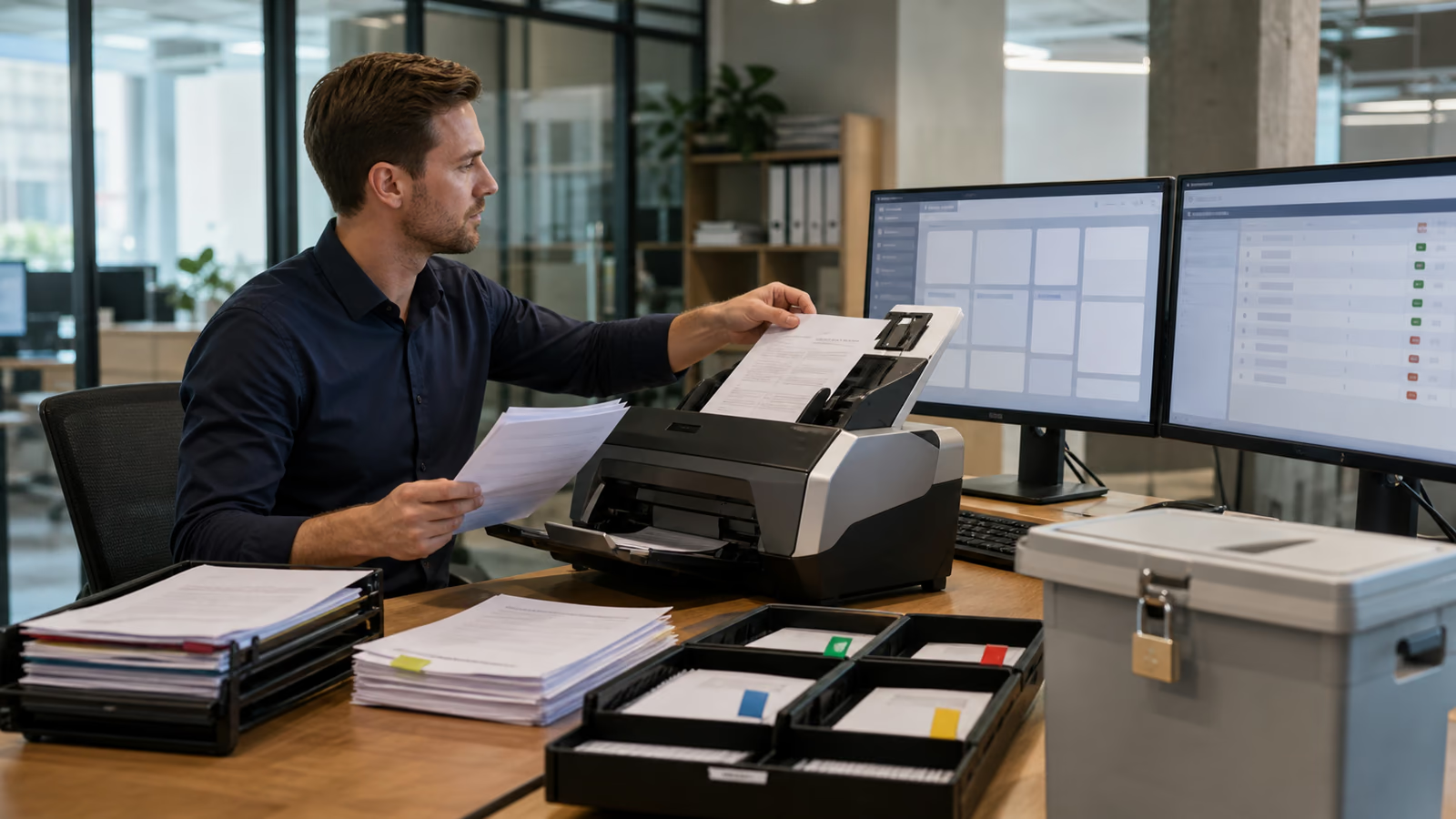
Paperless-ngx and OCR
We organise digital archives and repetitive document tasks. We configure text recognition, file tagging and agreed integrations. Employees retain control over errors and approvals.
Trusted by








































Do employees retype scanned data, search for the right contract or lose track of who has a document? We start with one workflow and agree how it should operate. Paperless-ngx provides document storage and search, while AI extensions can help describe documents. Approvals, handovers and connections to other systems need separate design. We do not present them as ready-made capabilities of every installation.
Archives, automation and knowledge retrieval meet different needs. We select a scope that fits existing systems and the tasks employees perform.
TÜV NORD Polska has certified Virtline's information security management system to PN-EN ISO/IEC 27001:2023-08. The certificate concerns Virtline, not automatic compliance of every client's document workflow.
View Virtline's certificateWe first test one agreed workflow. Further document types are added after results are assessed and responsibility for handling them is established.
We identify where files arrive, who needs them and where delays occur. We select a sample without unnecessary confidential information and define access requirements.
We check tools, maintenance status, safeguards and integration costs. We identify tasks that need AI and those that can be handled with straightforward rules.
We prepare the archive, rules and agreed connections. We test recognition, search, permissions, handovers and error-correction procedures.
We review results with employees and provide instructions and configuration details. We agree who manages new document types, updates, backups and exceptions.
Practical scope
Before work starts, we define document types, expected results and the limits of automation. We test each element on examples that reflect everyday company work.
Document sources, required fields, responsible people and handover stages. We agree access, retention periods and situations in which a file must be handled manually.
The agreed intake channels, text recognition, tags and search. Integrations depend on the interfaces available in existing systems; we confirm their scope before starting work.
Text recognition, field accuracy and classification checked on a representative sample. We include poor scans, missing information, duplicates and incorrect results, recording what needs employee review.
Document handling, configuration, updates and recovery from backups. We agree server and storage protection, permissions, logging and deletion rules. Ongoing maintenance is arranged separately.
Paperless-AI is an add-on for Paperless-ngx. Before deployment we check current releases, security advisories and maintenance of both projects. An AI add-on is not needed for every workflow. OCR and AI results need review; access, backups and updates are agreed separately. Archiving does not replace assessment of legal requirements for documents.
No. Paperless-ngx is a document management system; Paperless-AI is a separate extension using AI models. We assess them separately, including their updates and security. We do not assume that the extension is required in every project.
No. Quality depends on the scan, document layout and configuration, among other factors. We test company examples and agree field checks, missing-data handling and corrections. Extracted text does not replace reviewing the document before an important decision.
We do not assume that data flow. We first establish whether AI is needed and where processing is permitted. We separately check the archive, model, integrations, logs and backups. Access and protection of the server and storage require configuration.
Document types and volumes, source quality, integrations, access and approval rules, and maintenance requirements. We first define a limited trial. Its results inform the scope, costs and timetable for further work.
Describe document types, approximate volumes and the task that takes the most time. List existing systems and data requirements. Please do not send confidential attachments in your first message.
Discuss your documents