
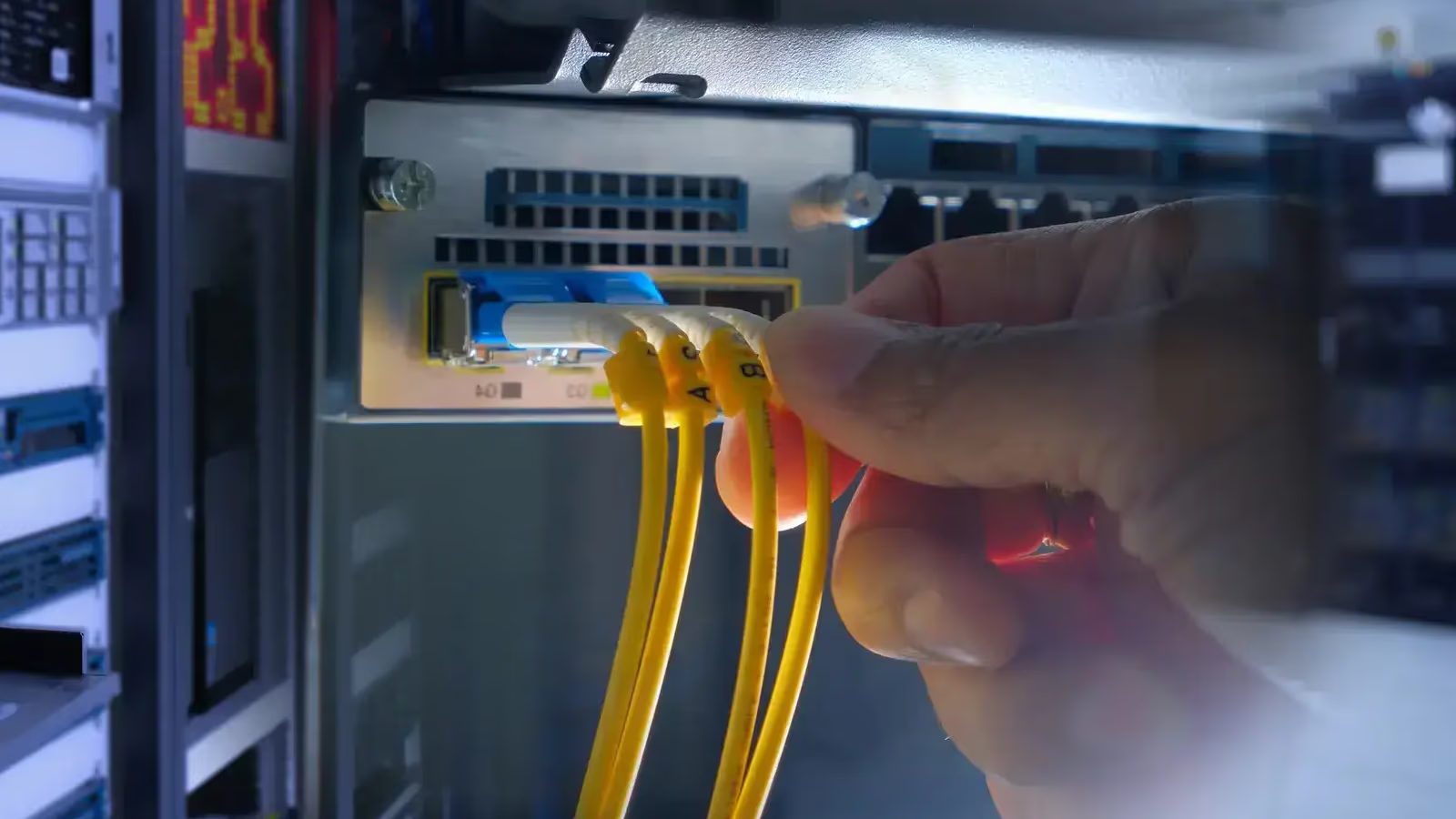








































Assessment and measurements
We review topology, cabling, routers, switches, Wi-Fi, firewalls, VPN, addressing and rules. We gather reports of user issues and application requirements, identify service owners, and record risks and documentation gaps.
B2B network infrastructure
We design new networks and plan changes to existing ones. Application and user needs guide Wi-Fi measurements, connections, access rules and testing. Implementation and subsequent operations have separately agreed scopes, owners and documentation.
Trusted by
A network connects locations, users, servers and cloud services. Design covers local and inter-site connections (LAN/WAN), Wi-Fi, switches, routing and edge devices. We support multi-site offices, manufacturing, warehouses, service businesses, organisations following acquisitions and remote teams. For new locations, we also plan cabling and racks. Modernisation starts by checking bottlenecks, address conflicts, outdated device software, undocumented rules and missing configuration backups.
Design, security configuration and administration are separate scopes. If a project needs Cat 6/6A or fibre cabling, a rack and acceptance measurements, the quotation identifies the contractor, required competence and measurement records. Scope, responsibilities and acceptance criteria are recorded in the design; installation work is not assumed to be included in every network service.
TÜV NORD Polska has certified Virtline’s information security management system to PN-EN ISO/IEC 27001:2023-08. The published certificate states its scope and validity.
View Virtline’s certificateFour stages connect assessment, planning, implementation with acceptance, and handover to operations. We agree the schedule and any downtime before changes.
We review topology, cabling, routers, switches, Wi-Fi, firewalls, VPN, addressing and rules. We gather reports of user issues and application requirements, identify service owners, and record risks and documentation gaps.
We agree topology, addressing, VLAN zones, routing and traffic priorities (QoS). We plan Wi-Fi, firewalls, VPN, redundant links, monitoring and room for growth. We prepare a cost estimate, a schedule, maintenance windows, acceptance criteria and a rollback plan.
We configure switches, access points, guest networks, administrative segments and safeguards. We migrate rules in stages with configuration backups, change control and critical service tests. We record results, limitations and acceptance decisions.
We deliver instructions, documentation and a stabilisation plan. We agree monitoring, device software updates, backup tests, tickets, incidents, rule reviews, reporting and architecture development. Ongoing support requires separate agreement.
Practical scope
The material supports administrators, service owners, management and auditors or security teams. Its scope follows the agreed work.
Physical and logical network maps, devices, ports, links, routes, IP addressing and critical service dependencies. As-built documentation describes VLAN zones and wired and wireless connections.
An access matrix for users, administrators, guests, systems, suppliers and VPN connections. We separate servers, printers, IoT devices, backups, administration and production. Firewall rules define permitted traffic between zones.
Configuration backups, device software versions, administrative accounts, suppliers and access owners. Change requests and approvals cover rules, links, Wi-Fi and documentation updates.
Availability, Wi-Fi coverage, segmentation, performance and backup-link failover tests. Reports identify the tested scope, risks, configuration-hardening recommendations, priorities and deadlines. We include a stabilisation plan and a proposal for ongoing support.
The design can connect the network to Active Directory, Entra ID, endpoint protection (EDR), event analysis and security teams (SIEM/SOC), monitoring, configuration backups and ticket handling. We match RADIUS network authentication and additional sign-in verification (MFA) to devices and services. VPN users, administrators and suppliers receive minimum necessary access, with session logs and access revocation. Firewall, VPN, switch and service logs can support incident handling. We check integration capabilities before implementation rather than assume every device is compatible. Redundancy needs failover testing, and configuration backups do not replace backups of business data. Service levels (SLAs), hours, responsibilities and escalation are agreed separately for devices, Wi-Fi, VPN and links.
These pages cover separate elements of day-to-day support and the wider infrastructure.
Availability, capacity use, packet loss, interfaces, VPN, Wi-Fi and device failures; alerts routed to agreed support.
Receiving and handling user requests with assigned responsibilities and escalation paths.
Ongoing environment support, administration and controlled changes beyond the network layer alone.
An overview of network infrastructure and services, from connections and devices to security and operations.
Audits and safeguards help set priorities. They do not replace project acceptance or an assessment of organisational compliance.
Assessment of topology, firewalls, VPN, Wi-Fi, VLANs, logs, software versions, administrative access and documentation.
Assessment of organisational gaps and needs, including segmentation, monitoring, access, vulnerabilities and incident handling.
Audits, safeguards and response support matched to business risk and critical services.
Additional sign-in verification and access protection for users, administrators and suppliers.
Event analysis, alert correlation and response coordination, with agreed log sources and responsibilities.
Yes. We inventory devices, topology, addressing, VLANs, routing, Wi-Fi, firewalls, VPN, administrative accounts, monitoring and documentation. We also review active incidents and access retained by the previous supplier. Urgent corrections are separated from planned modernisation, with agreed responsibilities for ongoing operations.
Timing depends on locations, devices, integrations, hardware availability and maintenance windows. The plan separates design, configuration, testing, documentation and acceptance. Changes may require downtime; we agree its scope, sequence and how to roll back an unsuccessful change. We do not promise disruption-free migration for every network.
Not on its own. Segmentation, access, MFA, firewalls, VPN, logs, monitoring, configuration backups and change history can provide material for NIS2, DORA, ISO 27001, KSB 315 or a customer audit. Requirements need assessment for the organisation. Neither a network project nor Virtline’s certificate establishes client compliance.
Network availability and capacity use, configuration changes, updates, backup tests, documentation, incident handling and risk reporting. Scope is agreed separately for devices, Wi-Fi, VPN and links. Monitoring does not automatically mean round-the-clock staffing, and an SLA does not promise a network without failures.
Describe locations, users, devices, Internet links and critical applications. Include Wi-Fi coverage, VPN problems, current firewalls, incidents, planned changes and audit requirements. We will define the first review. Do not send passwords or configurations containing secrets.
Discuss your network project